



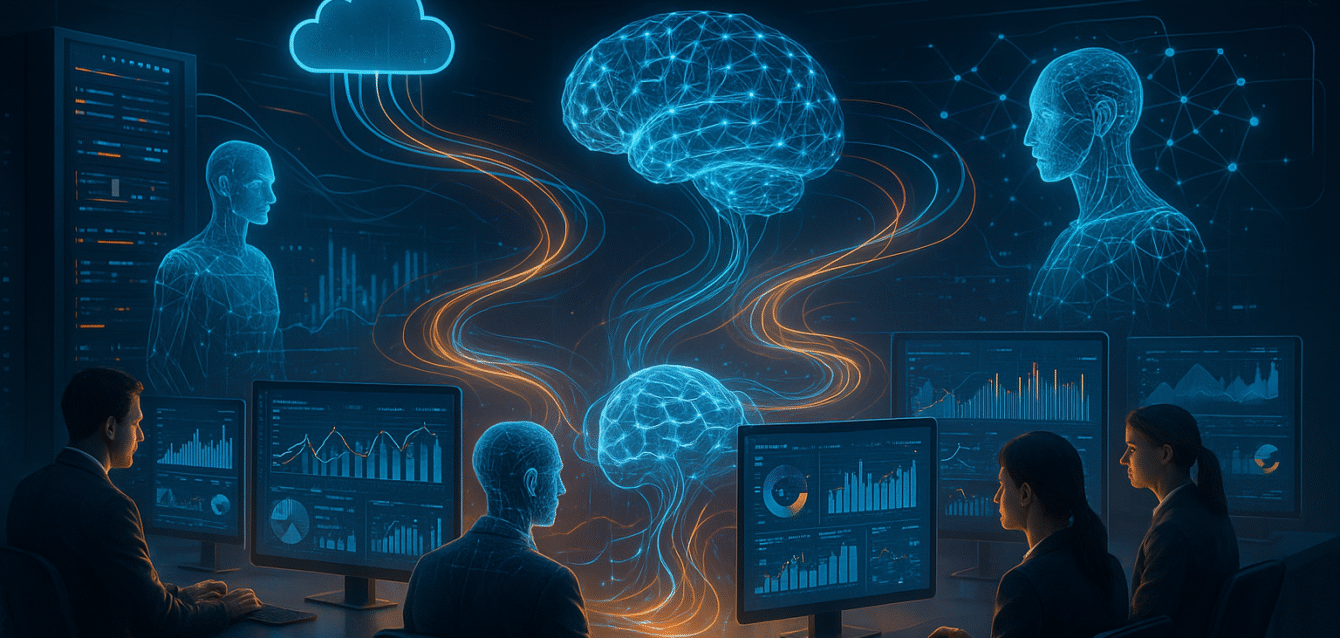
Data visualization has always been about transforming complex data into insights people can understand. But now, with Artificial Intelligence (AI) entering the picture, it’s no longer just about charts and graphs it’s about intelligent storytelling.
AI is redefining how we analyze, interpret, and present data. From automating dashboards to predicting insights before you even look for them AI is making data visualization smarter, faster, and far more intuitive. Learn more about Data Visuals by Tableau are redefining how analysts generate insights.
Let’s explore five powerful ways AI is changing the data visualization game.
1️⃣ Automated Insight Generation
AI tools can automatically detect patterns, anomalies, and correlations that humans might overlook.
Instead of manually exploring data, you get auto-generated insights ready to visualize.
🧩 Example: Tools like Power BI Copilot or Tableau GPT can describe trends in plain language (“Sales dipped by 15% in Q3 due to regional slowdown”) without any manual analysis.
💡 Why it matters: Saves analysts hours of exploration and lets decision-makers focus on why things happen, not what happened.
2️⃣ Natural Language Queries
No more complex SQL or filter clicks AI enables “Ask and See” dashboards.
You can simply type or speak:
“Show me the top 5 performing products this quarter”
And the system instantly creates a chart.
🧩 Example: ChatGPT-powered BI tools and Google Looker’s AI assistant already do this seamlessly.
💡 Why it matters: Makes data accessible to non-technical users, boosting organization-wide data literacy.
3️⃣ Predictive Visualization
Traditional dashboards show what has happened.
AI-powered visualization tools can show what’s likely to happen next.
🧩 Example: Predictive trend lines in tools like Qlik Sense or Zoho Analytics use machine learning to forecast sales, user engagement, or revenue.
💡 Why it matters: Turns your visualizations into proactive decision-making tools, not just reporting tools.
4️⃣ Adaptive & Personalized Dashboards
AI learns user behavior and preferences over time.
It can personalize dashboards highlighting the most relevant metrics for each user.
🧩 Example: A marketing manager sees campaign ROI first, while a product manager sees user churn — both powered by the same dataset.
💡 Why it matters: Reduces dashboard fatigue and focuses attention where it truly matters.
5️⃣ Automated Data Cleaning & Preparation
Before visualization, 80% of the work often goes into cleaning and structuring data.
AI can now automate that identifying missing values, correcting errors, and standardizing formats.
🧩 Example: Tools like Trifacta, DataRobot, and Talend AI use ML algorithms to clean data intelligently before it even hits your visualization layer.
💡 Why it matters: Cleaner data = clearer insights = more reliable visual stories.
How AI is Transforming Data Analytics in 2025
🌐 Final Thoughts
AI isn’t replacing data visualization it’s supercharging it. With automation, personalization, and predictive intelligence, your charts are no longer static they’re living, learning tools that evolve with your data.
As AI continues to mature, the future of data visualization isn’t just smarter it’s self-aware.