




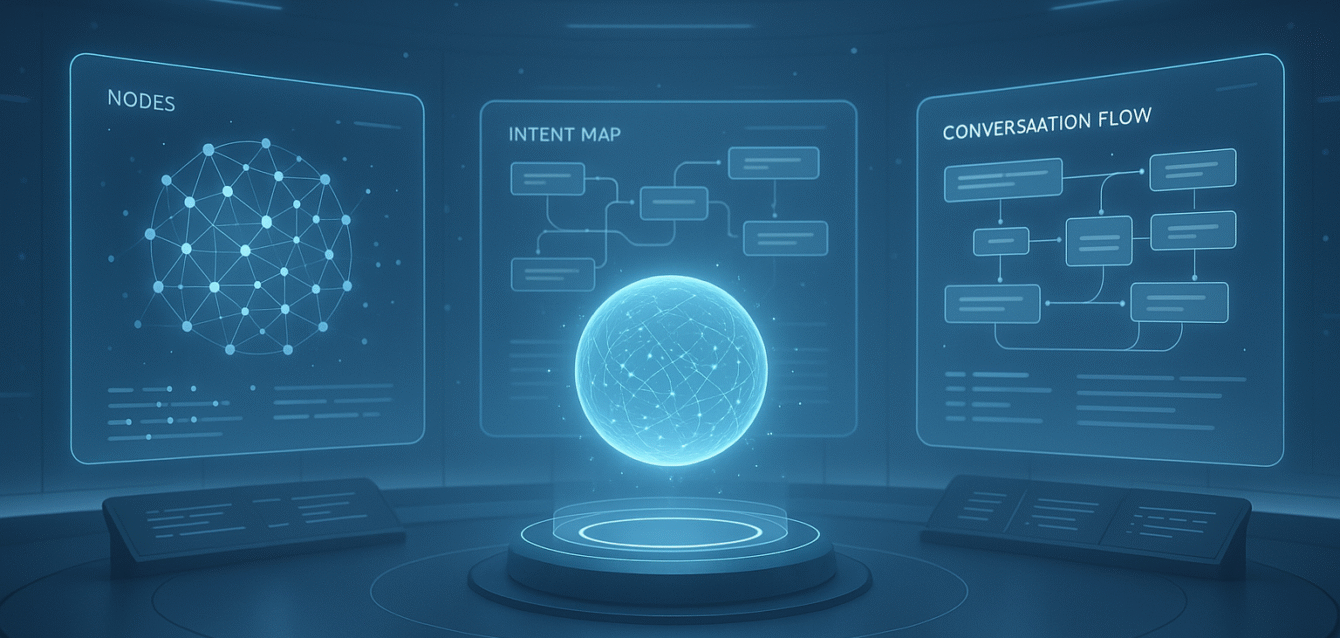
Conversational AI has rapidly evolved from basic chatbots to intelligent systems that can understand context, reason through information, and deliver meaningful outputs. These systems now help businesses handle support, automate workflows, make data accessible, and simplify daily operations.
To build a high performing system, it’s important to understand the layers that power an effective conversational experience. Each layer plays a unique role, and together they shape how well the assistant understands users, retrieves information, and responds with clarity.
Natural Language Understanding
Natural Language Understanding (NLU) is the core of any conversational AI. It transforms raw user input into a structured form the system can work with.
Strong NLU handles
• Intent detection
• Entity extraction
• Sentiment interpretation
• Context hints and disambiguation
When NLU is trained on diverse data and refined for domain specific scenarios, accuracy rises dramatically. This is especially important for industries like healthcare, finance, and e-commerce where terminology and user expectations differ widely.
Dialogue Management
Once a system understands what the user means, it must decide what to do next. Dialogue management is responsible for controlling the flow of the conversation. For a broader look at how conversational AI systems interpret user intent and manage interactions, you can refer to this helpful breakdown from DevRev
It handles
• Context tracking
• Topic switching
• Clarification questions
• Conversation state management
A strong dialogue manager ensures users never feel stuck or forced down rigid paths. Instead, it creates an adaptable and fluid experience similar to a human conversation.
Knowledge Retrieval
High performing assistants rely on a solid knowledge retrieval layer. Instead of generating answers blindly, they pull relevant information from verified sources.
Common retrieval approaches include
• Vector search
• Structured databases
• FAQ repositories
• Document extraction
• Real time APIs
This layer ensures responses remain accurate, consistent, and grounded. It also enables the assistant to scale across different business functions without constantly retraining the model.
Reasoning and Response Generation
This is the layer where language models add intelligence. Once relevant data is retrieved, the model analyzes it, applies reasoning, and crafts a natural, coherent response.
Effective response generation requires
• A strong base model
• Safety and guardrails
• Clear instructions and system prompts
• Domain specific tuning
This is also where tone, clarity, and personality are shaped. A well designed response layer makes a conversational AI feel trustworthy and easy to interact with.
Personalization and Memory
Users expect assistants to remember previous interactions and personalize answers accordingly. Memory systems allow the AI to recall past queries, preferences, and context.
They can enable
• Tailored recommendations
• Follow up continuity
• User specific workflows
• Reduction in repeated questions
The result is a smoother experience that feels connected rather than transactional.
Integration Layer
A conversational AI becomes truly impactful when it integrates with external business systems. This layer connects the assistant with CRMs, ticketing tools, product databases, HR portals, or custom internal apps.
It allows the AI to
• Create or update records
• Fetch real time status
• Trigger automations
• Streamline workflows
This is where an assistant stops being a chat interface and begins operating as a functional work partner.
Monitoring and Continuous Improvement
A high performing system is never static. Ongoing monitoring helps identify gaps and areas for optimization.
Important metrics include
• Intent accuracy
• Response quality
• Resolution rates
• Escalation frequency
• Conversation time
• Drop offs
Continuous improvement ensures the assistant adapts to a growing user base, changing business processes, and new product updates.
Conclusion
A conversational AI system performs at its best when all these layers work in sync. From understanding language to retrieving accurate information, from reasoning through context to integrating with business tools, each component adds reliability and intelligence to the overall experience.
For organizations looking to build or modernize their AI capabilities, focusing on these building blocks creates a strong foundation. It helps deliver assistants that truly understand, adapt, and scale with business needs.