




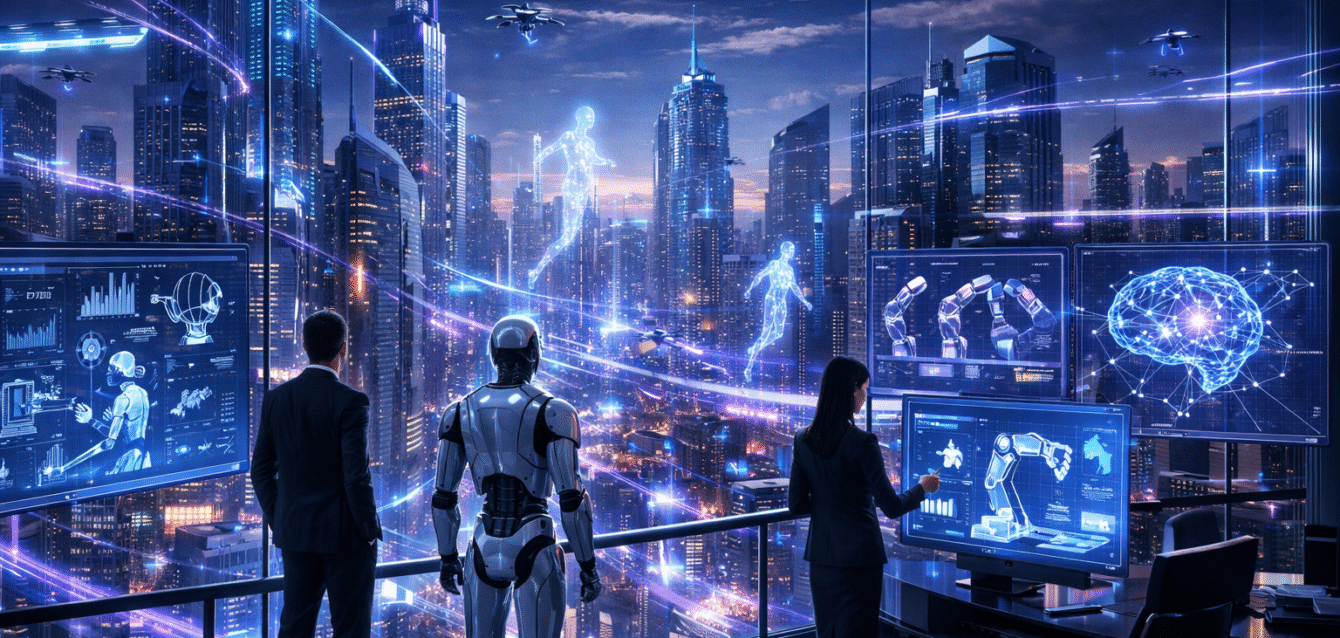
AI trends 2026 are shaping a future where artificial intelligence is no longer experimental. In 2026, it is becoming the backbone of how organizations operate, compete, and grow. The biggest shift is clear: AI is moving from tools to systems, from assistants to decision-makers, and from isolated use cases to enterprise-wide impact.
Here are the most important AI trends shaping 2026.
1. Agentic AI Takes Center Stage
AI is evolving from passive assistants into autonomous agents that can plan, act, and execute tasks independently.
- AI agents can manage workflows end-to-end
- They coordinate across systems and teams
- They continuously learn and adapt
This marks a shift toward AI acting like a digital workforce rather than just a tool.
2. AI Moves from Copilots to Decision Engines
AI is no longer just assisting humans. It is influencing decisions.
- Predictive and prescriptive analytics guide actions
- Real-time insights replace static dashboards
- AI becomes embedded in business workflows
Enterprises are moving from reporting to decision intelligence systems.
3. Enterprise AI Goes All-In (From Pilot to Production)
2026 is the year AI truly scales.
- Organizations are embedding AI across operations
- Leadership is driving top-down AI strategies
- ROI and real business impact are now the focus
Success depends on execution, not experimentation.
4. AI Becomes the Backbone of Enterprise Architecture
AI is no longer an add-on. It is becoming core infrastructure.
- AI is integrated into software development
- Cloud platforms are evolving around AI workloads
- Systems are being redesigned for intelligence-first operations
This fundamentally reshapes how technology stacks are built.
5. Rise of Conversational & Natural Language Interfaces
The way we interact with data is changing.
- Users can ask questions in natural language
- AI generates insights instantly
- Complex dashboards are being replaced
Natural language is becoming the new interface for enterprise systems.
6. Hyper-Personalization at Scale
AI is enabling businesses to deliver deeply personalized experiences.
- Real-time recommendations
- Behavior-based targeting
- Dynamic customer journeys
This is transforming marketing, sales, and customer experience.
7. AI-Powered Automation Gets Smarter
Automation is evolving beyond repetitive tasks.
- AI handles complex decision-making workflows
- Combines RPA with machine learning
- Improves efficiency across departments
Automation is becoming intelligent, not just rule-based.
8. Multi-Modal AI Becomes Standard
AI is no longer limited to text.
- Combines text, images, video, and audio
- Enables richer insights and understanding
- Supports more complex real-world applications
This expands AI’s role across industries and use cases.
9. AI Governance, Risk, and Ethics Become Critical
As AI scales, so do risks.
- Organizations are investing in AI governance frameworks
- Focus on transparency, bias, and compliance
- Risk management becomes essential for adoption
Without trust, AI cannot scale effectively.
10. AI Agents + Humans = Hybrid Workforce
AI is becoming a collaborator, not a replacement.
- AI handles analysis and recommendations
- Humans focus on strategy and creativity
- Teams become faster and more efficient
Conclusion
The defining theme of 2026 is this:
👉 AI is no longer a feature. It is the system.
Organizations that succeed will not just adopt AI tools. They will build AI-powered ecosystems that drive decisions, automate workflows, and scale intelligence across the business.