




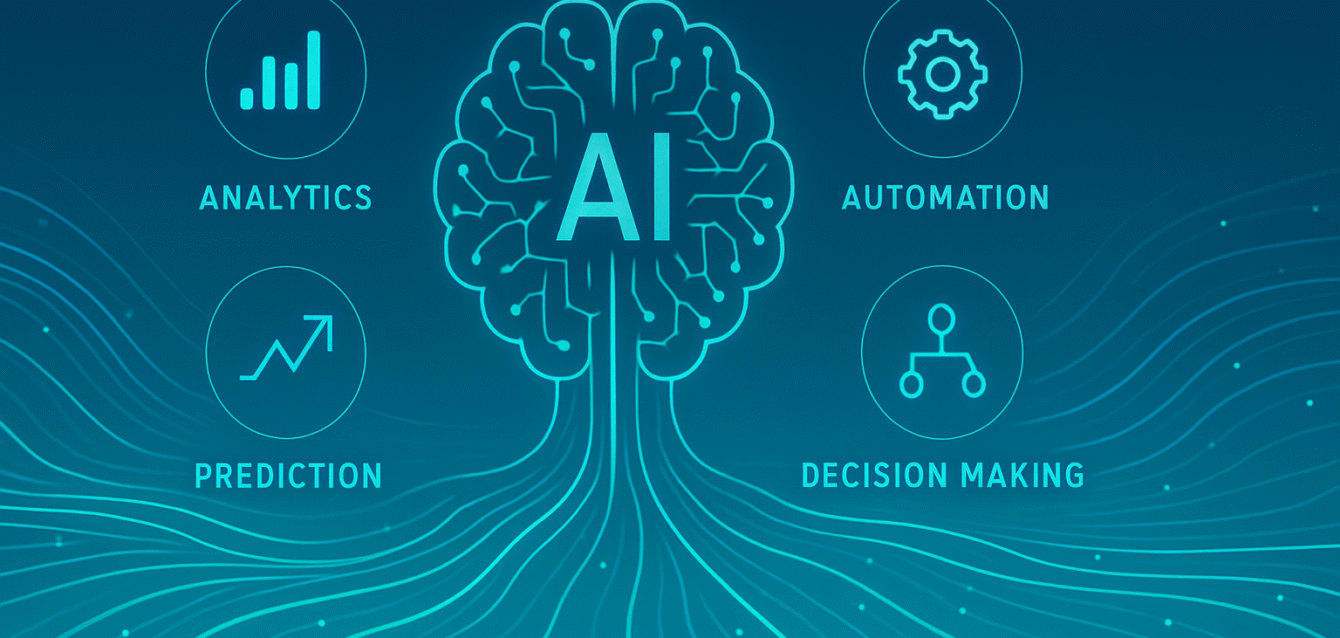
Data and AI have become two of the most important pillars of modern technology. They influence how businesses operate, how decisions are made, and how digital products are built. Yet many people still wonder what these terms actually mean and how they work together.
This guide explains both concepts in a clear and practical way.
What Is Data?
Data is information. It can be numbers, text, images, audio, video, or any record of an event, action, or observation.
Some examples of data in everyday life include:
- Your name and age in a form
- Purchase history in an app
- Website clicks recorded by analytics tools
- Temperature readings from a sensor
- Photos stored on your phone
Types of Data
- Structured data
Information arranged in rows and columns, like spreadsheets or databases.
Example: sales reports, employee records. - Unstructured data
Information that does not follow a defined format.
Example: emails, videos, social media posts, call transcripts. - Semi structured data
Data that has some structure but is not fully organised.
Example: JSON files, log files.
Why Data Matters
Data helps organisations understand what is happening, predict what might happen next, and decide what to do. It is the raw material that powers modern digital systems.
What Is AI?
AI, or artificial intelligence, is technology that allows machines to perform tasks that usually require human intelligence. This includes learning, reasoning, problem solving, decision making, and understanding language or images.
Examples of AI
- Recommendation systems in Netflix or Amazon
- Voice assistants like Alexa
- Chatbots that answer questions
- Self driving cars
- Fraud detection in banking
- Predictive maintenance in industries
AI works by analysing large amounts of data, identifying patterns, and making decisions based on those patterns.
How Data and AI Work Together
Data is the fuel. AI is the engine.
AI learns by processing thousands or even millions of data points. The more data it has, the better it can recognise patterns and make accurate predictions.
Relationship between the two
- Data provides the facts
- AI uses those facts to create intelligence
- Better data leads to better AI results
You can also explore a helpful explanation by IBM on how data management supports stronger AI systems.
Why Businesses Need Data and AI
Modern organisations use data and AI to:
- Automate repetitive tasks
- Improve customer experiences
- Predict risks and opportunities
- Personalise products and services
- Increase efficiency
- Make smarter decisions faster
You can also explore our in depth article on how Data and AI together enable digital transformation across industries.
Key Components of this Systems
- Data collection
Gathering information from apps, sensors, websites, or databases. - Data storage
Using cloud platforms, data warehouses, or lakes. - Data processing
Cleaning, organising, and preparing data. - AI model development
Creating models that learn from the prepared data. - Deployment and monitoring
Integrating AI into applications and tracking performance.
The Future of Data and AI
The future promises:
- More automation
- Smarter digital products
- Real time analytics
- Ethical and responsible AI
- Increased personalisation
- New business models powered by intelligent systems
Final Thoughts
Data tells the story of an organisation. AI understands that story and uses it to create value. Together, they power modern applications, smarter decisions, and faster innovation.